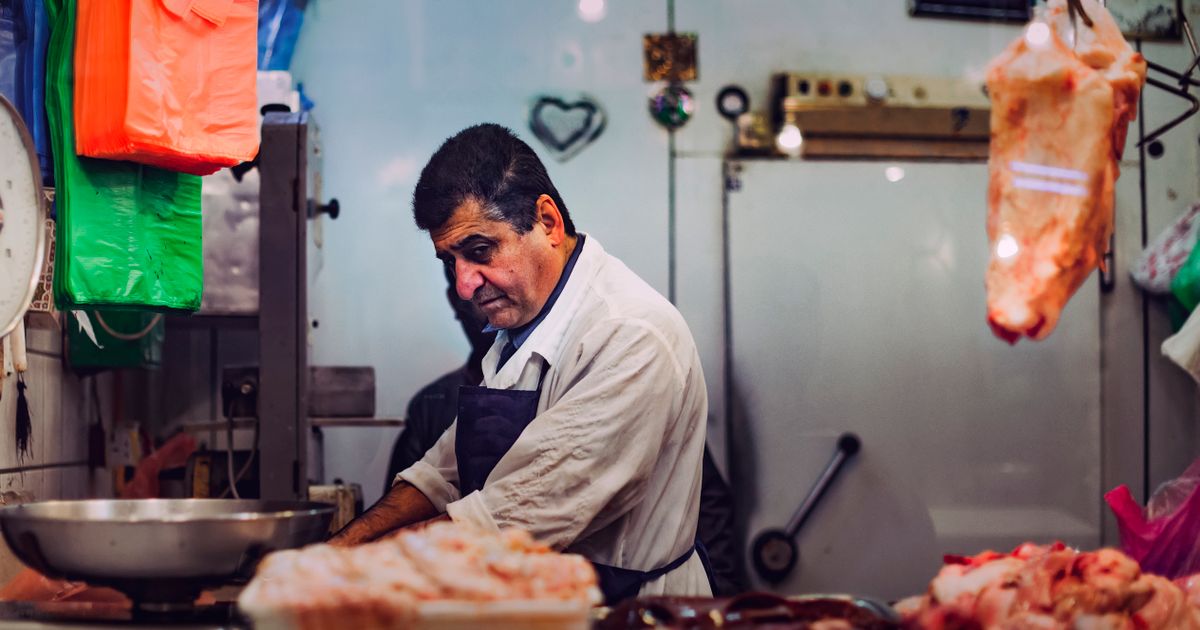
Your local butcher shop has access to whole animals and primal cuts, which means they can offer cuts that supermarkets simply cannot stock. The grocery store buys boxed sub-primals and trims them to the same standard cuts every time. A butcher who breaks down whole animals or sides can give you something different. Here is what to ask for.
Dry-Aged Steaks
Dry aging concentrates flavor and breaks down muscle fibers for exceptional tenderness. Grocery stores almost never carry it because the process takes weeks and requires dedicated cooler space. A good butcher shop that dry-ages in-house will have ribeyes, strips, or T-bones with 21-45 days of age on them. The flavor difference over wet-aged supermarket beef is noticeable - richer, nuttier, more intense.
Beef Short Ribs (Full Plate Ribs)
The thick dinosaur ribs you see in BBQ competition photos are called plate short ribs or beef short ribs. They are almost never stocked at grocery stores because they take up too much space and are hard to sell to casual shoppers. A butcher can cut them for you - usually 3-4 bones per rack with 2-3 inches of meat on top. These are incredible smoked low and slow.
Pork Jowl
Pork jowl (the cheek of the pig) is the base of guanciale, the Italian cured pork used in authentic carbonara and amatriciana. Fresh pork jowl is also excellent braised or slow-cooked. Most grocery stores do not carry it. A good butcher who breaks down whole hogs will have it.
Beef Cheeks
Beef cheeks are a tough, heavily-worked muscle that transforms with a long braise into something silky and deeply flavored. They are not sold at supermarkets. Ask your butcher for them specifically - they are cheap per pound and incredibly rewarding if you cook them low and slow with red wine.
Bavette (Sirloin Flap)
Bavette is the sirloin flap steak - a coarser-grained, intensely beefy cut that sits adjacent to the flank. It is outstanding grilled over high heat and sliced against the grain. Grocery stores do not stock it; it often gets ground into burger or trimmed away. A butcher who knows their way around a whole sirloin can cut you one.
Marrow Bones
Roasted marrow bones - split femur bones brushed with salt and herbs - are one of the simplest and most impressive things you can make at home. Ask your butcher for femur bones split lengthwise. They are inexpensive and usually easy to get if you ask.
Hanger Steak
The hanger steak (sometimes called onglet or butcher's steak) is one of the most flavorful cuts on the animal. There is only one per cow, and for years butchers kept it for themselves - hence the name. It has a pronounced beefy flavor and a slightly coarser texture. Cook it rare to medium-rare. It is worth asking for even if the butcher has to order it specifically for you.
Custom Grinds
Ask a butcher to custom-grind a blend of cuts for you. A popular choice: 70% chuck, 30% short rib for burgers with superior fat content and flavor. You can also ask for a coarser or finer grind depending on how you cook. None of this is possible with packaged ground beef.
How to Find a Real Butcher Shop
Look for shops that break down whole animals or at least primal cuts in-house rather than just repackaging boxed beef from a distributor. Search butcher shops by state on Butcher Bud and call ahead to ask what they cut fresh and whether they do custom orders.